"Shrimp Safe" Fish: There is No Such Thing (Except One)
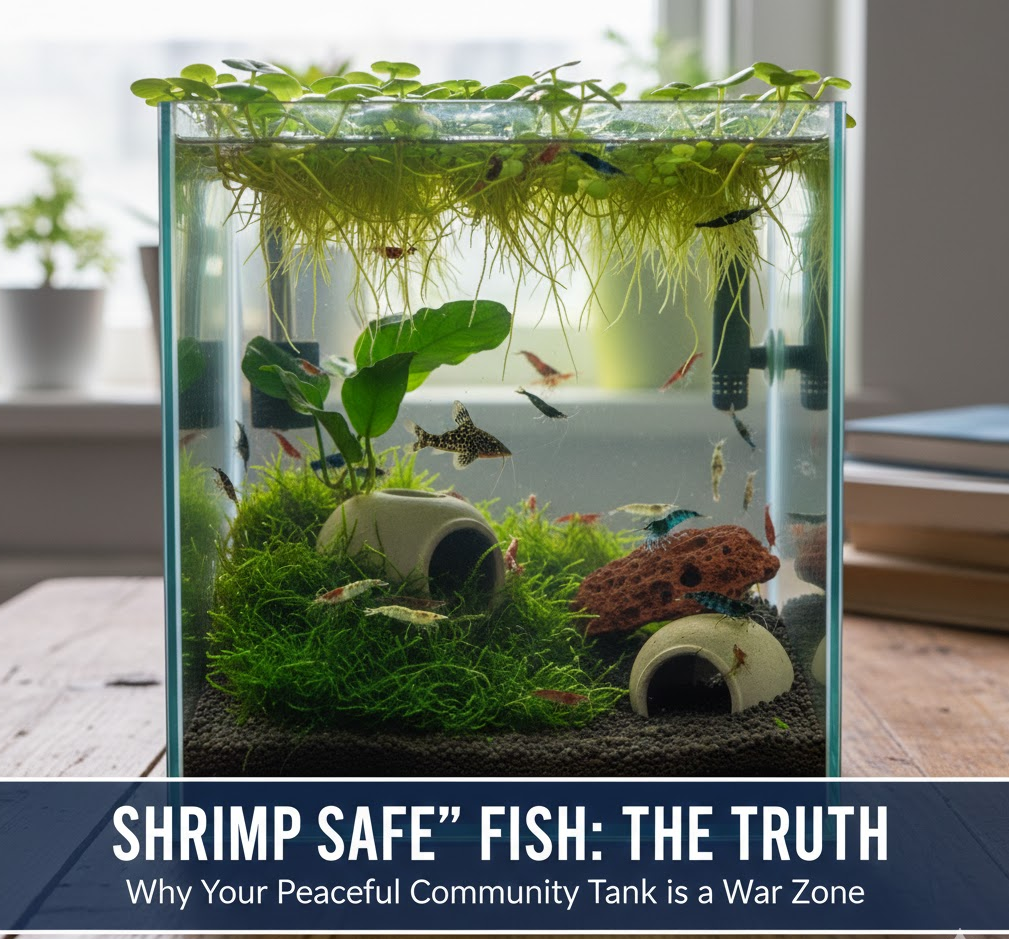
In the aquarium hobby, the most frequent question I see is: "What fish can I keep with my cherry shrimp?"
The community is full of anecdotes. One person says their Betta lives in harmony with their colony; another says that same Betta turned their €50 shrimp investment into a 10-minute buffet. As someone with a scientific background, I prefer to look at the biological reality rather than the exception.
Here is the cold, hard truth: If a shrimp fits in a fish’s mouth, it is food.
The Genetic Impulse: Predator vs. Prey
Even "peaceful" fish are genetically hardwired to investigate small, moving objects as potential protein sources. While you might see your adult shrimp grazing boldly, the real carnage happens where you can't see it.
Newborn shrimplets are roughly 2mm long—the perfect size for almost any nano fish. Even if your fish "leaves the adults alone," they are likely systematically hunting your shrimplets. Over time, you’ll notice your colony isn't growing, or worse, it's slowly shrinking. This isn't "bad luck"; it’s predation.
The One True Exception: The Otocinclus
In the entire hobby, there is only one fish that is truly, 100% shrimp-safe: the Otocinclus.
The Biology: Otos have a specialized mouth designed exclusively for rasping algae and biofilm. They lack the jaw structure or the predatory instinct to hunt shrimp.
The "Accident": An Oto might accidentally suck up a microscopic shrimplet while grazing on a leaf, but they are not hunters. They are the only fish I would trust in a high-grade breeding tank.
While a rasping suckermouth is designed for algae, it doesn't guarantee a "shrimp-safe" nature for most fish. Larger species like Bristlenose Plecos can accidentally crush fragile shrimplets or even prey on vulnerable, freshly molted adults as their protein needs shift with age. Other specialized species, such as Hillstream Loaches or Stiphodon Gobies, can inadvertently suck in or "body-slam" small shrimp due to their aggressive grazing movements and powerful suction. Even the Siamese Algae Eater often abandons its herbivorous diet as it matures, turning into a sleek predator that will readily hunt your colony. Only the Otocinclus combines a small physical footprint, lack of territorial aggression, and a strict biological focus on biofilm, making it the only truly safe rasping specialist for a shrimp tank.
The "Safety" List (Proceed with Caution)
If you are willing to accept a lower shrimplet survival rate in exchange for a community look, these are the top contenders. They are "safe" only because their mouths are physically too small to swallow an adult.
Tier 1: The "Safe" Zone (Highest Survival)
Otocinclus Catfish: The "Holy Grail." Their mouths are physically incapable of hunting shrimp. 100% safe.
Pygmy Corydoras: Tiny, peaceful mid-water swimmers that rarely even look at the substrate.
Chili Rasboras: Their mouths are so small they struggle to eat even the tiniest shrimplets.
Neon/Phoenix Rasboras: Similar to Chilis; very low bioload and zero predatory drive.
Hillstream Loach: Great algae eaters. Safe for adults, but can "bulldoze" shrimplets while grazing.
Corydoras Habrosus: A dwarf bottom-dweller; peaceful, though they may stumble upon babies.
Tier 2: The "Caution" Zone (Will Eat Babies)
Celestial Pearl Danio: Shy "micro-predators." They will actively hunt through moss for shrimplets.
Ember Tetra: Peaceful, but opportunistic. They snap at anything that fits in their mouth.
Neon Tetra: Can be surprisingly aggressive hunters once they reach full adult size.
Green Neon Tetra: Slightly smaller and safer than standard Neons, but still a predator.
Harlequin Rasbora: Mostly mid-water, but will "dive-bomb" shrimplets caught in open water.
Bristlenose Pleco: Safe for adults, but "clumsy." Can crush babies or eat soft, molting shrimp.
Honey Gourami: The "calmest" Gourami, but still has a feeler-based hunting instinct.
Tier 3: The "High Risk" Zone (Expect Losses)
Endler’s Livebearer: High energy and relentless. They will peck at shrimp until they stress out.
Guppies: Constantly hungry. They will try to eat anything, regardless of the shrimp's size.
White Cloud Mountain Minnow: Fast hunters; they snatch shrimplets swimming toward the surface.
Dwarf Gourami: Highly inquisitive and territorial; they will actively hunt adult shrimp.
Cherry Barb: Active foragers that pick through moss specifically looking for protein (babies).
Betta Splendens: Purely down to personality; some are "chill," most are serial killers.
African Dwarf Frog: Nearly blind but has a powerful "snap" reflex for anything that moves.
How to Successfully Mix Fish and Shrimp
It is possible to have a thriving (though slower-growing) colony in a community tank, but you have to "engineer" the environment to give the shrimp a genetic advantage.
1. The Moss "Safe House"
Moss is not optional. Dense clumps of Java Moss, Christmas Moss, or Fissidens create a micro-environment that fish cannot enter. Shrimplets can live, graze, and molt inside these "fortresses" until they are large enough to be ignored by the fish.
2. Caves, Nooks, and Crannies
Most community fish are middle-to-top column swimmers. To keep your shrimp safe, provide plenty of hardscape at the bottom:
Small Ceramic Tubes: Perfect for molting adults.
Porous Lava Rock: Creates tiny holes that shrimplets can retreat into.
Botanicals: Leaf litter (like the almond leaves we discussed) provides both cover and a food source.
3. Visual Breaks
If a fish can see a shrimp from across the tank, it will investigate. Use tall plants (like Valisneria or Rotala) to break up the line of sight. If the shrimp can move from one side of the tank to the other without being "spotted" in open water, their survival rate skyrockets.
The Verdict
If your goal is to breed high-quality Neocaridina and maximize your yield, keep them alone (or with Otos). If you want a beautiful community tank, you can add nano fish—but do so with the understanding that you are sacrificing a percentage of your colony to the food chain.
Just keep shrimping (and keep hiding)!
Comments (0)
Want to leave a comment? Sign in to your account to join the discussion.
Don't have an account? Create one